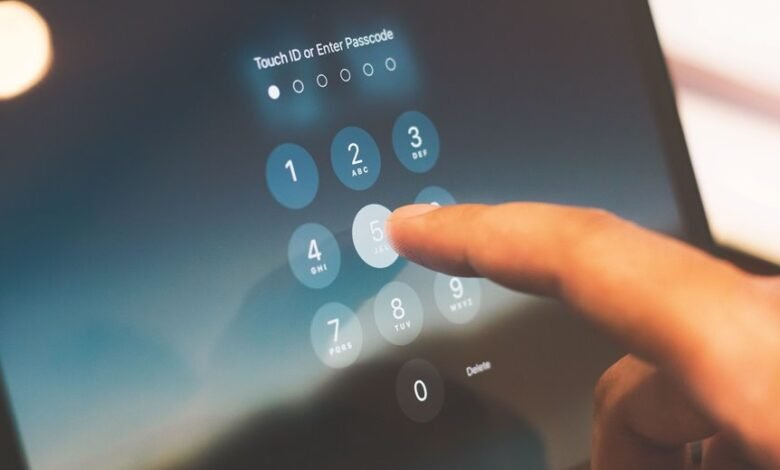
The 20.21.22 Private Network Login Guide defines a controlled, isolated environment for authorized devices and services. It emphasizes privacy, segmentation, and auditable access through multi-factor authentication, device posture checks, and scoped tokens. Least-privilege access and automated onboarding support resilience and governance. The guide also covers common login issues and policy-driven controls to maintain confidentiality and operational continuity. Understanding these controls highlights remaining questions on enforcement, auditing, and ongoing governance.
What Is 20.21.22 Private Network and Why It Matters
A 20.21.22 Private Network is a controlled, isolated network environment designed to securely connect authorized devices and services within an organization. It enables defined access and auditable activity, supporting governance and resilience.
The framework emphasizes privacy controls and robust network segmentation, reducing risk exposure. Clear boundaries, documented policies, and controlled data flows empower freedom while preserving confidentiality, integrity, and operational continuity.


How to Securely Log in to 20.21.22 Private Network
To securely log in to the 20.21.22 Private Network, authenticated users must follow a multi-factor access workflow that verifies identity, device posture, and authorization scope before granting session access.
This process integrates strict security auditing, ensuring traceable events and anomaly detection.
Access tokens are issued upon successful verification, enforcing scoped permissions and revocation capabilities to sustain resilient, auditable connectivity.
Troubleshooting Common Login Issues on 20.21.22
Troubleshooting begins by identifying common failure points within the 20.21.22 login workflow, including credential validation, device posture checks, and authorization scope enforcement.
The analysis emphasizes deterministic diagnostics for password management workflows and resilience against token refresh delays.
Hardware tokenization is evaluated for latency and integrity, ensuring secure, auditable prompts.
Clear remediation paths prioritize minimal user friction while preserving strict access controls.
Best Practices for Ongoing Access and Permissions on 20.21.22
Effective ongoing access and permission management for 20.21.22 requires a structured, policy-driven approach that minimizes risk while ensuring legitimate productivity.
The framework emphasizes least privilege, periodic role reviews, and automated onboarding.
Data governance controls data exposure, while access auditing tracks changes and anomalies.
Regular reconciliations with compliance standards ensure durable governance, clear accountability, and system-wide trust for authorized users.
Frequently Asked Questions
Can I Access 20.21.22 From Mobile Devices?
Access may be possible, depending on configuration; mobile authentication can secure access, while offline mode limitations may apply. Device enrollment, push notifications, and platform compatibility determine viability for accessing 20.21.22 from mobile devices, with strict security controls.
What Is the Downtime Window for Maintenance?
Downtime is scheduled within the maintenance window, typically aligning with off-peak hours. The precise duration varies by incident severity, but a transparent timeline is provided ahead of time, including expected start, end, and service restoration targets during the maintenance window.
How Is User Activity Audited and Logged?
Audit logging records user actions and system events, while continuous activity monitoring detects anomalies in real time. The approach ensures traceability, complies with policy, and supports incident response, safeguarding freedom through transparent, standards-based accountability without impeding legitimate exploration.
Are There Regional Access Restrictions or IP Blocks?
Regional restrictions and ip blocks may apply, with mobile access variably constrained. A defined downtime window exists; activity auditing and credential recovery procedures remain in place to ensure security while preserving user autonomy within policy limits.
What Recovery Steps Exist After Credential Compromise?
Like a repaired bridge after a quake, recovery steps follow credential compromise with precision. The report outlines: immediate credential reset, multifactor re-enrollment, credential monitoring, access revocation, audit trails, incident containment, and ongoing anomaly detection for secure recovery.
Conclusion
In short, the 20.21.22 Private Network guide guarantees airtight security by mandating MFA, posture checks, and scoped tokens—tools that magically eliminate human error at every login. Yet even with automated onboarding and regular role reviews, one suspects productivity will inexorably flourish under strict least-privilege constraints. The policy-driven controls promise confidentiality and continuity, while the inevitable edge cases politely remind us: within security, completeness is a moving target. Irony duly noted; compliance remains the objective.