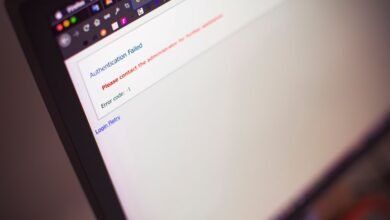
The 168.311 Invalid Private IP Address Guide examines why an IP may be deemed invalid, focusing on misaligned private ranges and conflicting network settings. It outlines common misconfigurations, from DHCP scope errors to gateway mismatches, and presents a concise, solution-focused approach. The discussion frames verification steps and preventive measures without overpromising results, prompting the reader to consider precise actions that will resolve issues and reveal where gaps remain to be addressed.
What Is the 168.311 Invalid Private IP Address Error?
The 168.311 Invalid Private IP Address Error occurs when a device assigns or uses an IP address that falls outside the valid private IP range, or when the address conflicts with network or router settings. This highlights networking quirks and the need for proper IP validation.
Solutions focus on verification, correct range use, and consistent device configuration for freedom and reliability.


Why Private IP Address Misconfigurations Happen
Misconfigurations in private IP addresses arise from a mix of human error, legacy setups, and automatic assignment quirks. These issues stem from misapplied subnet masks, inconsistent documentation, and incompatible network devices. Addressing them requires clear governance, validation of address pools, and enforced policies.
blocked protocols and reserved ranges create friction; proper segmentation, auditing, and proactive monitoring restore control and freedom in network design.
Step-by-Step Troubleshooting You Can Trust
Step-by-step troubleshooting for invalid private IP addresses proceeds with a structured, methodical approach: identify symptoms, confirm scope, and verify configuration against documented policies.
The process targets misconfigured subnetting and ip address validation gaps, prompting precise checks of DHCP scopes, router interfaces, and gateway settings.
Clear remediation follows, documenting changes and validating results before proceeding to broader network stabilization.
How to Prevent Future Private IP Address Issues
Preventing future private IP address issues hinges on proactive governance and disciplined configuration management. A structured policy defines IP ranges, subnetting norms, and change controls, reducing invalid subnet occurrences.
Regular audits detect address duplication, repo management prevents overlapping allocations, and automated alerts flag anomalies.
Emphasize documented workflows, immutable templates, and rehearsed rollback plans to sustain reliable, freedom-friendly network operation.
Frequently Asked Questions
Can This Error Affect VPN Connections?
Yes, this error can affect VPN connections by disrupting network routing and address validity. In this view, idea one highlights misconfigurations, while idea two points to corrective steps ensuring secure tunnels and reliable authentication, performance, and freedom from leaks.
Does MAC Address Influence Private IP Errors?
A MAC address does not determine a private IP; it does not cause private IP errors. The issue lies with DHCP, network scope, or VPN server settings. Properly configuring DHCP reservations and VPN policies resolves MAC-independent private IP problems.
Are There Specific OS Differences in Handling the Error?
OS differences exist in handling error; some systems route via VPN impact considerations, others rely on router reset and ISP support. MAC influence appears limited, but network adapters may prompt fixes. The solution is cross-platform consistency for robust handling error.
Should I Reset My Router to Fix It?
A reset may help, but not guarantees; it can resolve invalid routing and ipv4 conflicts by reassigning addresses. If issues persist, investigate device IP conflicts, update firmware, and consider manual subnet settings before rebooting again.
When Is It Necessary to Contact ISP Support?
ISP support is warranted when local diagnostics fail to isolate router vs device scope checks, or when persistent issues exceed a simple restart, indicating a likely service-level fault that requires ISP support to resolve beyond user control.
Conclusion
In short, the 168.311 invalid private IP address warning is delightfully cooperative: it tells you exactly what’s wrong, then quietly refuses to fix itself. When misconfigurations arise, teams dutifully chase DHCP scopes, gateway settings, and router interfaces—until the network hums again. Ironically, precision is the antidote to chaos, yet it’s the last thing most plans embrace. The conclusion is simple: align addresses, document changes, and let the system behave—problem solved, morale intact, mystery resolved.